
Electron Beam Welding by Artech Welders

Electron Beam Welding

1st time in India with technology
transfer from BARC

High-precision welding

High-precision welding

Deep-penetration

Deep penetration

No-contamination

No contamination

Electron Beam Welding Machines & Services in India

Artech Welders is an Indian manufacturer and solution provider for Electron Beam Welding technology (EBW). Our EB welding machines are deliver deep-penetration, high-precision welds for aerospace, automotive, defence and critical engineering applications, supported by controlled vacuum systems and stable beam control.

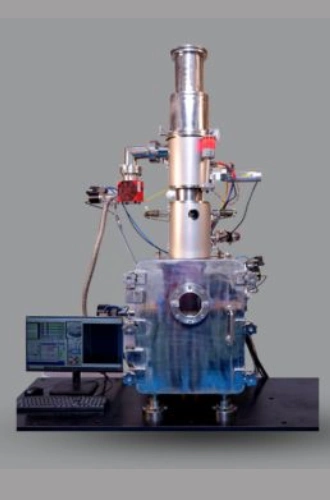
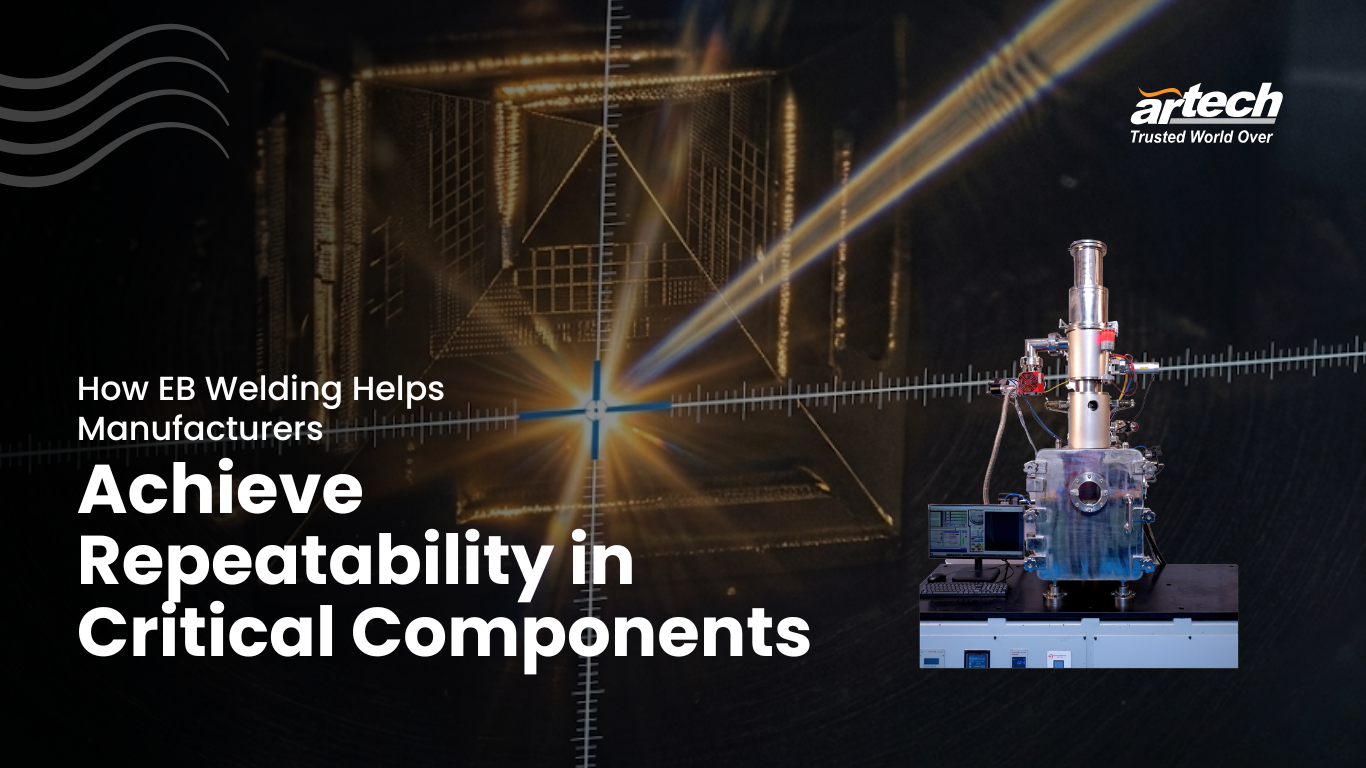
Electron Beam Welding Machine
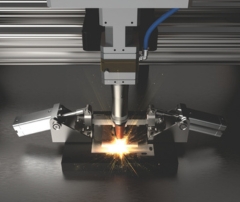
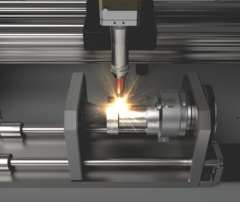
Electron Beam Diagram
Here’s a closer look at how EBW joins dissimilar metals effectively.

Get A Quote

    Benefits of EB Welding

    High weld EBW

    High Weld Speed

    Faster production with consistent quality

    Deep Weld EBW

    Deep Weld Penetration

    Ideal for thick and complex materials

    Narrow Weld Bead EBW

    Narrow Weld Bead

    Precision with minimal material waste
    EBW Low heat input and distortion

    Low Heat Input & Distortion

    Reduces stress on welded components

    Minimal Heat-Affected Zone

    Minimal Heat-Affected Zone (HAZ)

    Protects material integrity
    EBW Reactive & Refractory Materials

    Suitable for Reactive & Refractory Materials

    Expands welding possibilities

    Artech Welders

    30 Years of Legacy

    Founded in 1994, Artech Welders was among the first machine tool manufacturers in India to develop indigenous Capacitor Discharge Welding technology. What began as a mission to serve the Indian industry’s need for specialist welding technology has expanded globally, with Artech’s advanced welding machines and Electron Beam Welding solutions driving product innovation across aerospace, automotive and critical engineering industries worldwide.

    Customers
    0 +
    Years of expertise
    0 +
    Diverse industries
    0
    Segments
    0 +

    Industries We Serve

    EBW Aerospace

    Aerospace

    High-precision Aerospace grade welding

    EBW in Automotive

    Automotive

    High-strength Weld for automotive parts

    EBW in Pharma

    Medical

    Clean purity joints for critical medical components

    EBW in Electricals

    Electricals

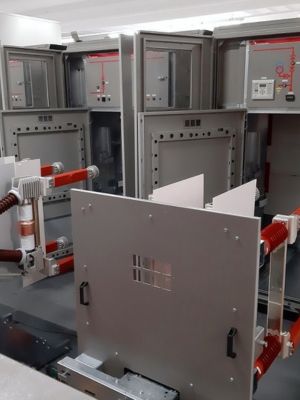
    Reliable electrical joints to maintain high conductivity

    EBW in Manufacturing

    Manufacturing

    Enabled complex geometries and dissimilar metal joining.

    EBW in Nuclear

    Nuclear

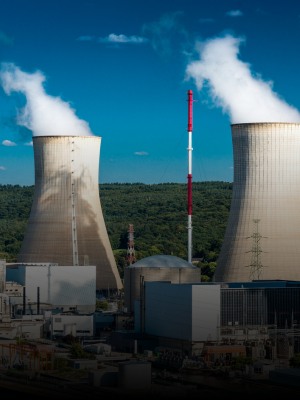
    Controlled & Integrity-driven welding for nuclear structures

    EBW in Power generation

    Renewable energy

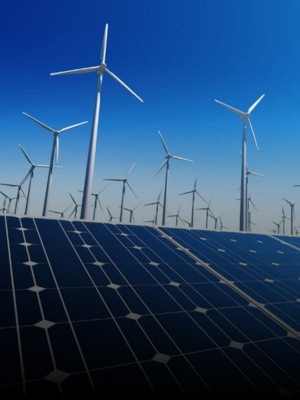
    High-integrity welding for energy components

    EBW in Defense

    Defense

    High-strength for defence-grade weld integrity

    Frequently Asked Questions

    Electron Beam Welding is a high-precision fusion welding process that uses a focused beam of high-velocity electrons to join materials. The kinetic energy of the electrons transforms into intense heat upon impact, creating a deep, narrow weld vapor cavity with minimal heat input to the surrounding material.

    Exceptional Depth-to-Width Ratio: Capable of producing deep, narrow welds in a single pass.
    Minimal Heat-Affected Zone (HAZ): Reduces thermal distortion and preserves the base material properties.
    High Purity and Strength: Performed in a vacuum, which prevents contamination (oxidation, nitriding) and results in very strong, clean welds.
    Ability to Join Dissimilar Metals: Effectively welds many combinations of metals that are incompatible with other processes.
    Superior Precision: Ideal for complex, critical components where accuracy is paramount.

    EB welding is highly versatile and can join a wide range of conductive materials, including:

    Reactive & Refractory Metals: Titanium, Zirconium, Tungsten, Molybdenum.
    Stainless Steels & Superalloys: Inconel, Hastelloy.
    Dissimilar Metal Combinations: e.g., Copper to Stainless Steel.
    Other Metals: Aluminum, Copper, Tool Steels, and many more.

    High Vacuum (Hard Vacuum): The workpiece is enclosed in the same high-vacuum chamber as the electron gun. This provides the cleanest possible weld, with the deepest penetration and smallest HAZ. It is used for the most critical aerospace, medical, and nuclear components.

    Medium/Partial Vacuum: The beam is generated in a high vacuum but exits into a localized vacuum chamber surrounding the weld joint. This allows for larger or more complex-shaped components and faster cycle times while still providing a high-integrity weld.

    Our services are critical in industries where failure is not an option:

    Aerospace & Defense: Turbine blades, engine components, satellite parts, missile casings.
    Medical Device: Implants (hips, knees), surgical instruments, pacemaker cases.
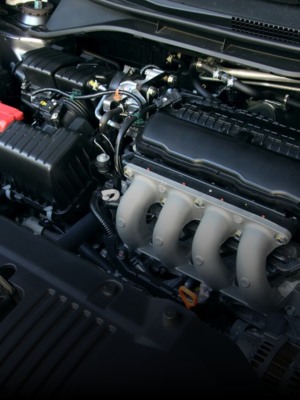
    Automotive & Motorsports: Gear components, valves, turbocharger parts, lightweight structural assemblies.
    Energy & Nuclear: Pressure vessels, heat exchangers, nuclear fuel rods.
    Semiconductor & Vacuum: Chambers, feedthroughs, and other ultra-high vacuum components.

    EB welding can handle a vast range of sizes. We can weld materials from foil-thin (~0.025 mm) up to several inches thick in a single pass, depending on the material and our machine’s power. Our work chambers can accommodate components of various dimensions; please contact us with your specific size requirements.
    Electron Beam Welding (EB Welding) uses a focused beam of high-speed electrons to generate heat and fuse metals. The process is carried out in a vacuum, allowing deep penetration, narrow welds, and minimal distortion.
    Electron Beam Welding is performed in a vacuum and offers deeper penetration and cleaner welds. Laser Beam Welding is done in open air or with shielding gas and is better suited for larger components with moderate penetration needs.
    Electron Beam Welding requires a vacuum chamber, which limits component size. It also demands proper surface cleanliness and has a higher initial equipment investment compared to conventional welding methods.

    Quality is integral to our process. We ensure it through:

    Precise CNC Control: All beam parameters and workpiece manipulation are digitally controlled for perfect repeatability.
    Real-Time Monitoring: We monitor key parameters like beam current, focus, and weld speed in real-time.
    Rigorous Procedures: Each job is supported by a detailed Welding Procedure Specification (WPS).
    Comprehensive NDT: We offer and recommend non-destructive testing (e.g., X-ray, Dye Penetrant) to validate weld integrity.

    The high-vacuum environment is the key. It eliminates the presence of oxygen, nitrogen, and hydrogen, which are the primary causes of porosity, embrittlement, and oxidation in welds. This results in a metallurgically pure joint.
    Yes. The Electron Beam process is entirely non-contact. The workpiece is not part of the electrical circuit, making it ideal for non-magnetic, as well as magnetic, materials.
    We can typically work from a 3D CAD model (e.g., STEP, IGES, SLDPRT) to program complex weld paths. For simpler geometries, a fully dimensioned 2D drawing is sufficient.
    A tight, precise fit-up is critical for a successful EB weld. Joint faces should be machined square and clean. All contaminants like oils, grease, and oxides must be thoroughly removed from the joint area prior to welding.
    Electron Beam Welding is preferred when high precision, deep penetration, low distortion, and consistent weld quality are critical for the application.

    While the initial setup has associated costs, EB welding is often the most cost-effective solution for complex, high-value components. The savings come from:

    Elimination of Filler Wire: In most cases, no filler material is needed.
    Minimal Post-Weld Machining: The low distortion reduces or eliminates the need for straightening or re-machining.
    Reduced Scrap Rates: The high precision and repeatability result in very low rejection rates.
    Part Consolidation: It allows you to design assemblies from multiple pieces, saving on material and machining costs.

    Industries such as aerospace, automotive, defense, power generation, medical devices, tooling, and heavy engineering benefit from Electron Beam Welding.

    Our Blog

    Medical manufacturing operates under strict performance and reliability standards. Components used in surgical tools, implants, diagnostic equipment, and medical housings ... <p

    E Beam Welding Advantages and Disadvantages

    E Beam Welding, also known as Electron Beam Welding (EBW), is a high-precision fusion welding process used in aerospace, automotive, ... <p

    Electron Beam Welding Machine for Aerospace Industry

    The aerospace industry demands precision, reliability, and zero compromise on quality. Components operate under extreme temperatures, high pressure, and continuous ... <p

    Our Customers

    Client Logos